Visual Tactility
Visual Tactility
Tactile Experience in Graphic Design
2025I taught a 10-week course called Visual Tactility at Design School in Seoul with a small group of students with minimal design background.
The course emphasized the direct experience from the primary source. This feels more important than ever when we spend most of our days looking at a flat screen watching short-forms or talking to AI with no real engagement with reality.

experience to language/concept to image/text/video/etc
We explored design possibilities that engage our sense of touch, from creating tactile boxes inspired by Moholy-Nagy at Bauhaus to producing objects that connect users and the world as an extension of our body. Tactility is multi-sensory, which may include all five (or eight) senses. When we consider not only the sense on our skin, but also weight, pressure, temperature, spatial and atmospheric expriences, there emerge interesting possibilities to create a rich experience. As Kenya Hara puts it, we can “awaken” the senses.
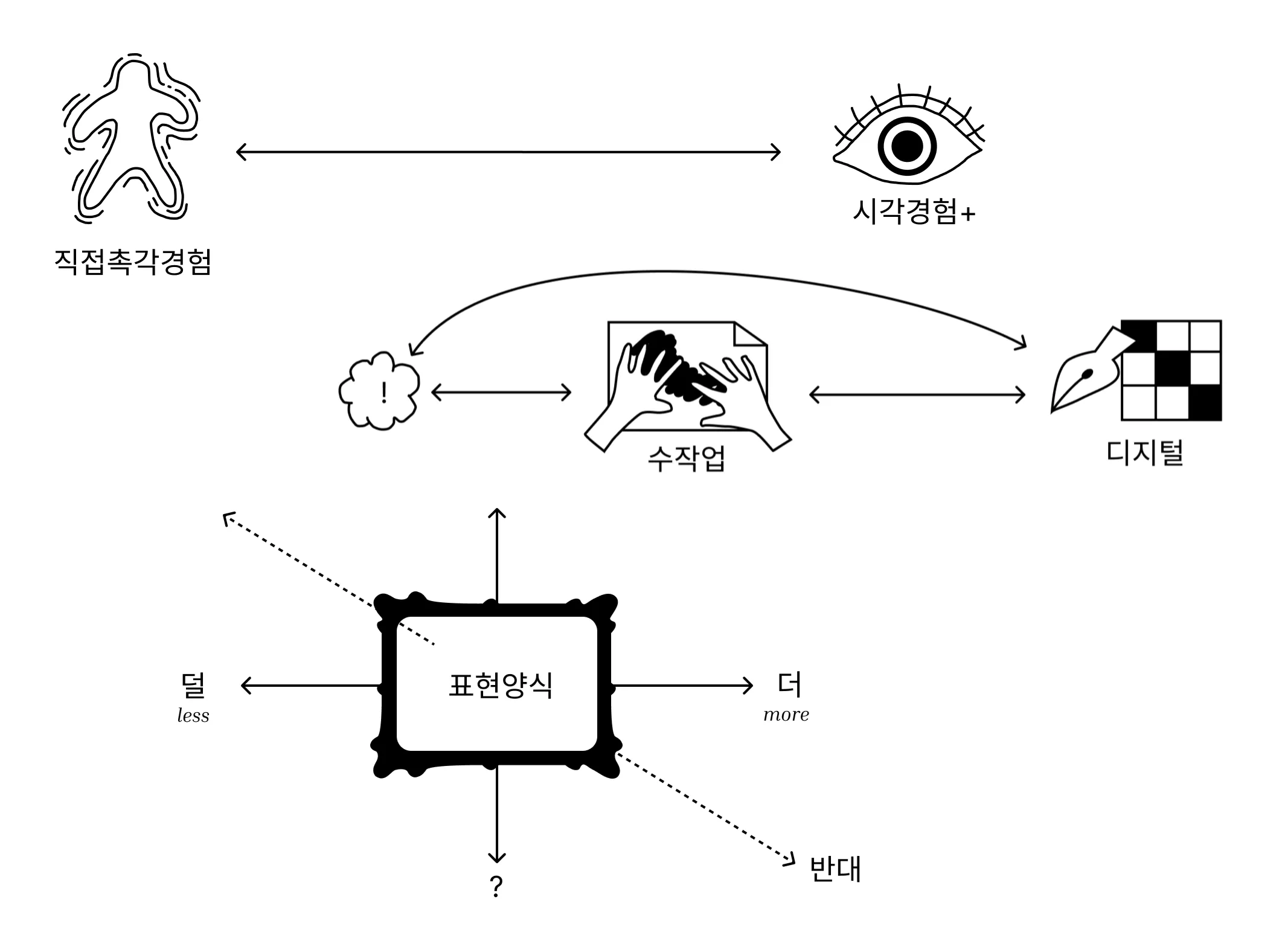
From top to bottom; continuum between direct (primary) exprience and visual (secondary) experience; From idea to handicraft to digital and the space between them; the parametric space of visual expression
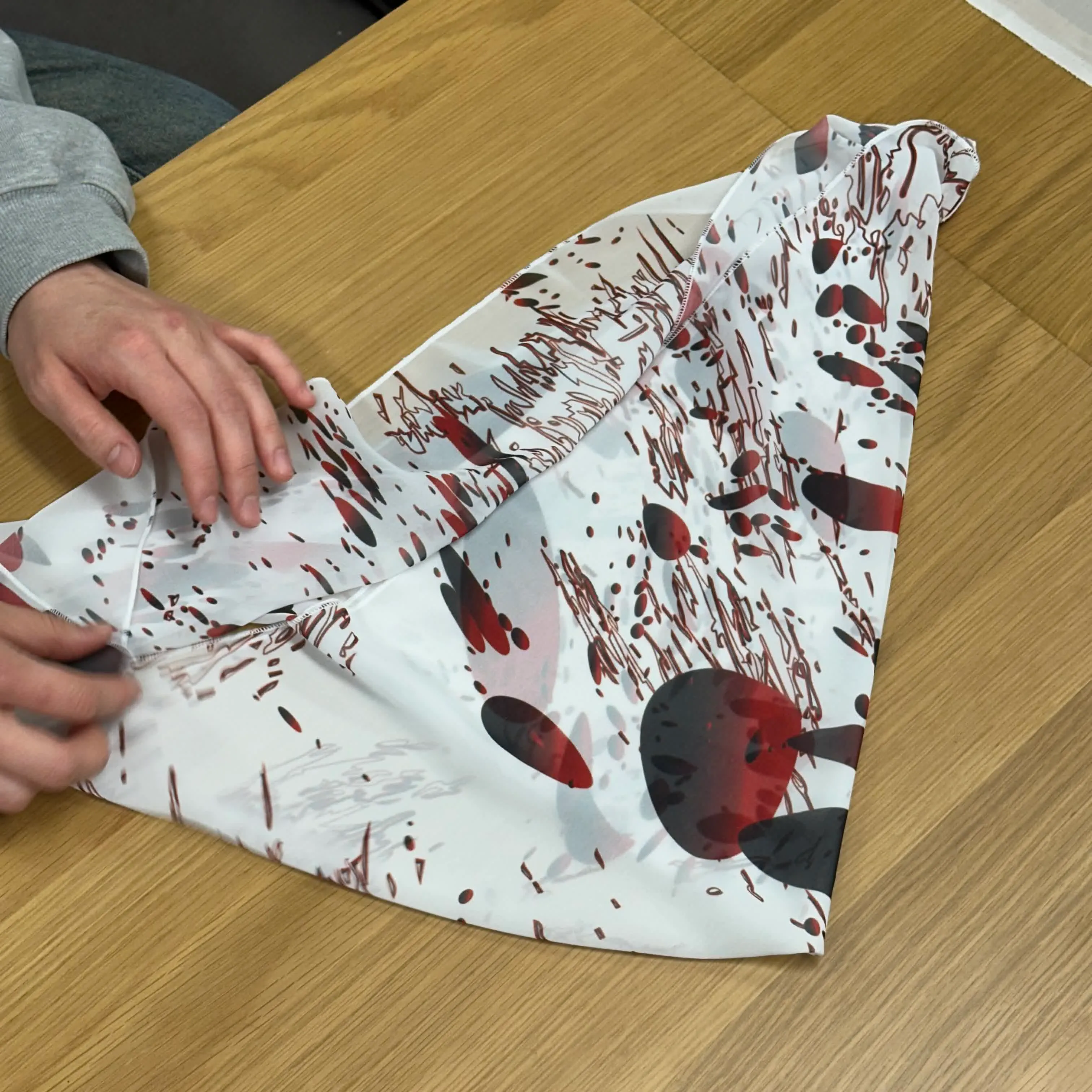
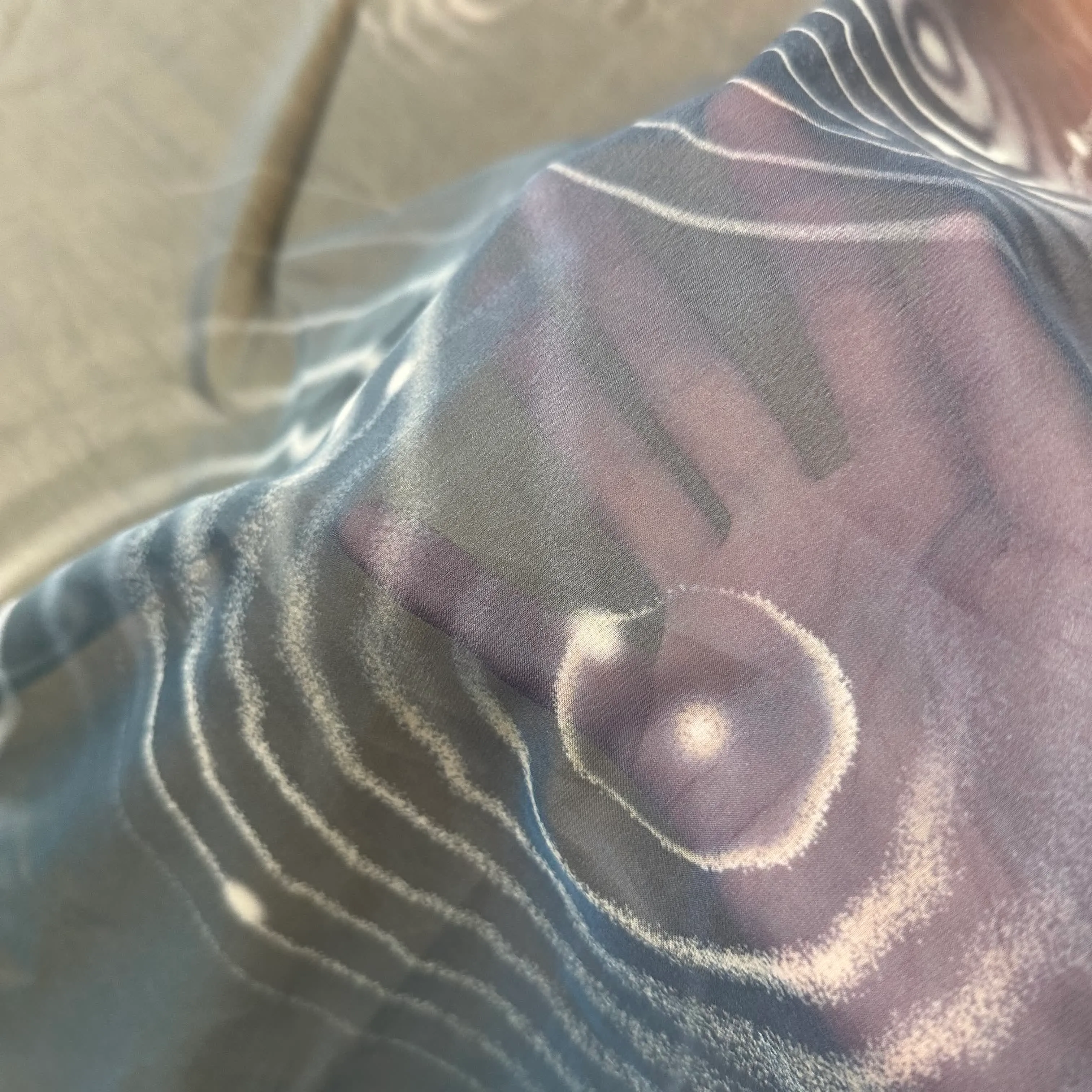
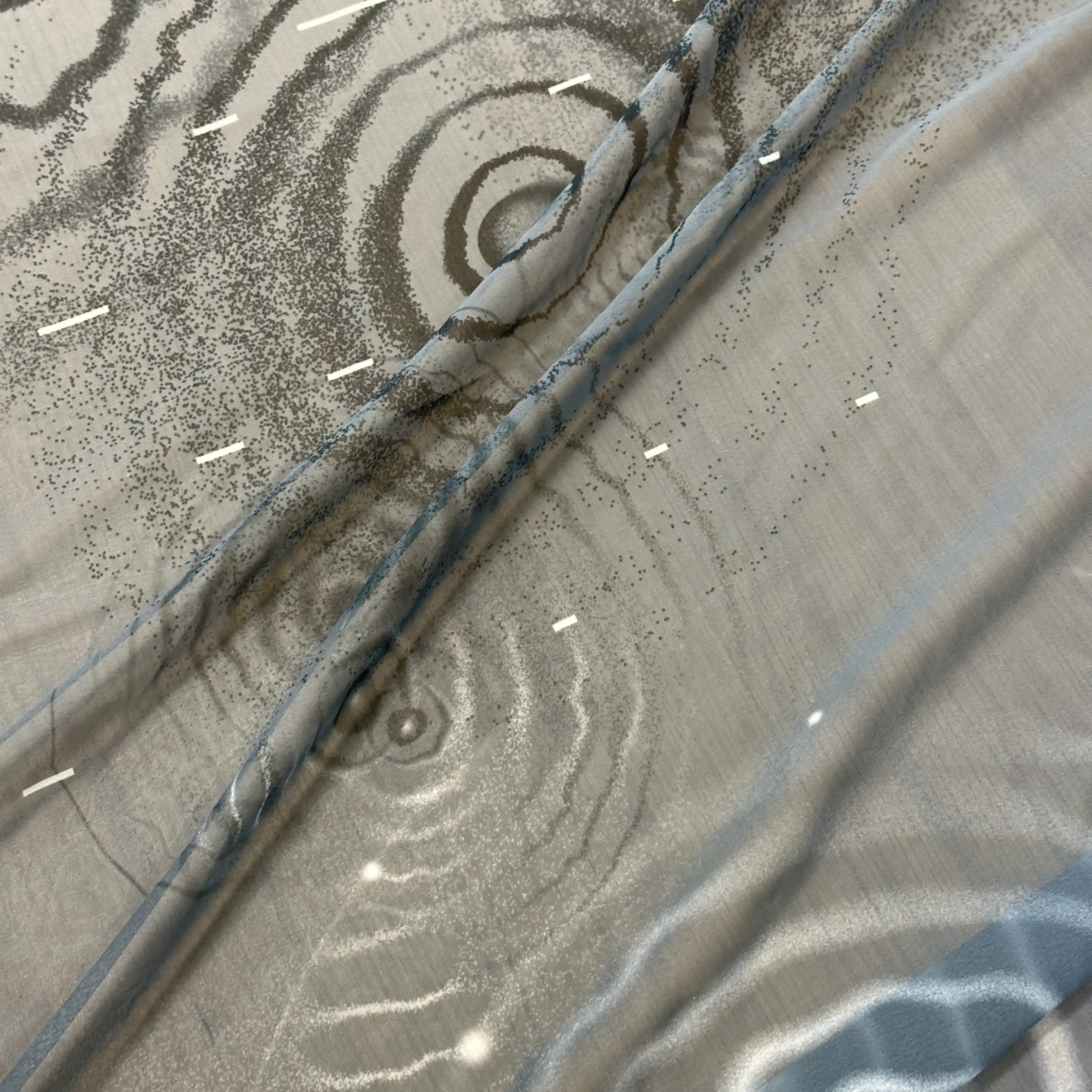
The final project prompted students to consider tactile experience of the 2-dimensional graphics they create as well as the physical object itself. Below are a few examples of the student work: